


Visual tour · Start with the model
A first visual route through SMM and DTT
Follow source histories, six nested inner levels, outer completion, spatial readout and complex phase through five connected diagrams.
This route introduces the Single Monad Model and Duality of Time through the interfaces between generation and observation. Begin with the conceptual map, then follow the explicit constructions that give its terms mathematical meaning.
Read each arrow as a relationship to define and each enclosure as a dependency to explain. The six inner generative levels are nested within one process; the seventh is the outer completion that makes a retained record available. Physical clocks and measured durations require their own operational construction.
Stop 1 of 5
Begin with the source and the retained record
Follow the diagram from source histories through completion to the record available for observation. Geometry, clocks and matter then appear as separately defined ways of reading that record. This is the programme’s organizing map: the detailed articles specify the maps, admissible tests and information that completion retains.
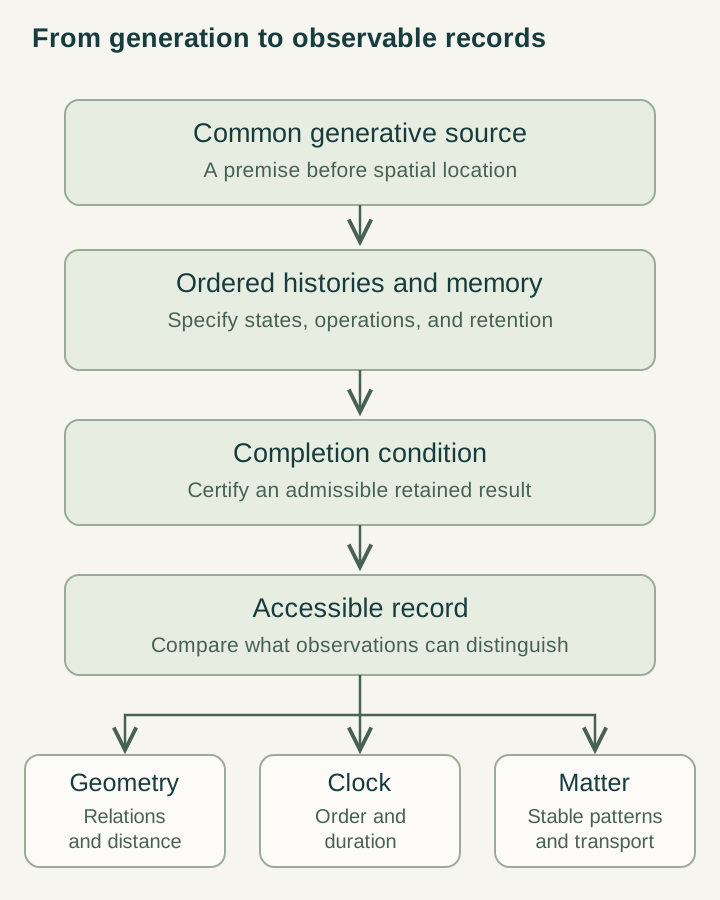
Source histories, completion, and retained records form the conceptual interface for geometry, clocks, and matter readouts. The diagram organizes those dependencies while leaving each physical readout to be defined independently.
Find this figure in the galleryStop 2 of 5
Read the six enclosures as nested dependencies
Work through the nested levels before following the separate arrow to outer completion. An inner role depends on work accumulated at earlier levels. The displayed ranks belong to a selected readout example; neither the number of enclosures nor the number of completed episodes supplies a calibrated physical duration.
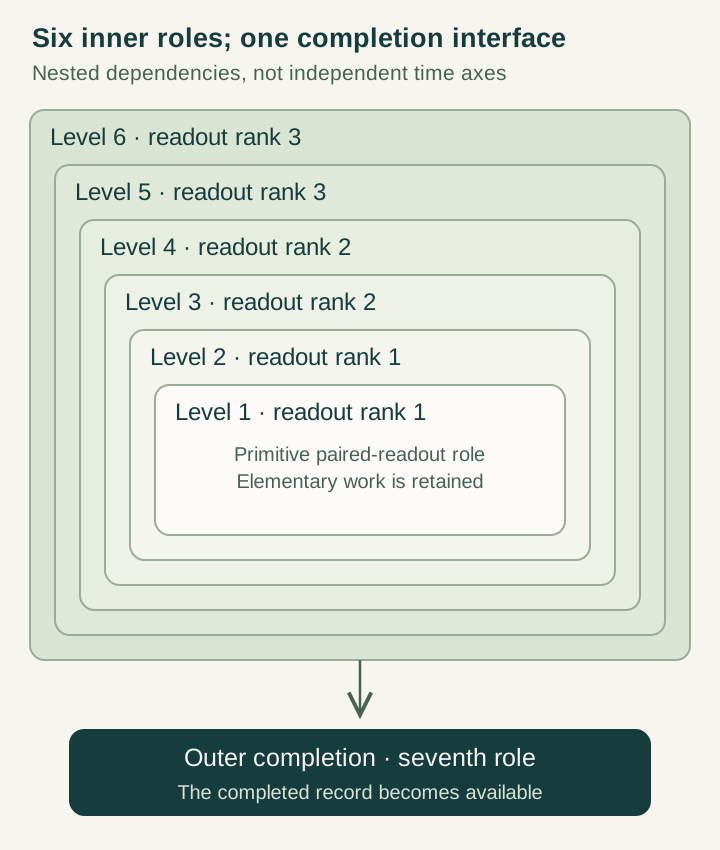
Six nested functional roles prepare a record that a seventh completion interface makes available. The paired ranks belong to the stated readout example, and the enclosures indicate dependencies rather than spatial shells.
Find this figure in the galleryStop 3 of 5
Calculate how six signed channels span three directions
The paired frame supplies channels +e₁, −e₁, +e₂, −e₂, +e₃ and −e₃. Their successive spans have ranks 1, 1, 2, 2, 3 and 3. This calculation makes the readout precise under the declared pairing and frame. The linked derivation also asks which assumptions select that interface and how changing them changes the result.
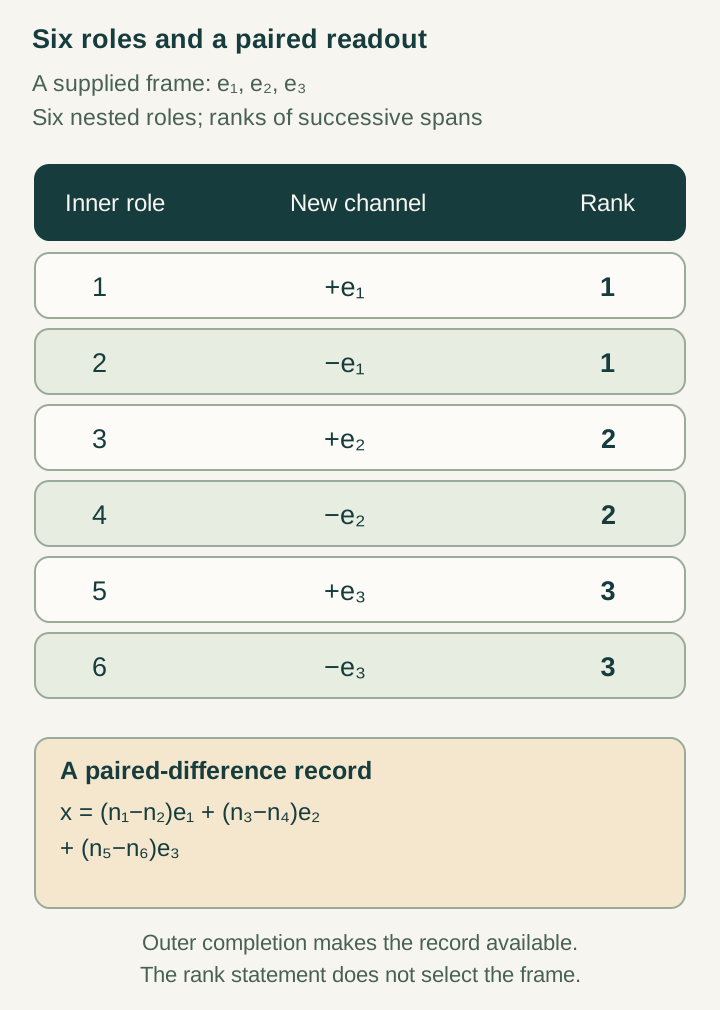
Signed channels ±e₁, ±e₂, ±e₃ have successive span ranks 1, 1, 2, 2, 3, 3. This exact paired-frame calculation supplies a three-component readout under the chosen frame and nested-role assumptions.
Find this figure in the galleryStop 4 of 5
Keep phase selection and composition visible
The first construction extracts a quarter-turn from an oriented real skew dynamics on its dynamic sector. The second imposes a shared phase when carriers are composed. Read those operations separately: selecting an ordinary complex structure and defining a composite require distinct mathematical steps. Stationary directions and the orientation convention remain explicit.
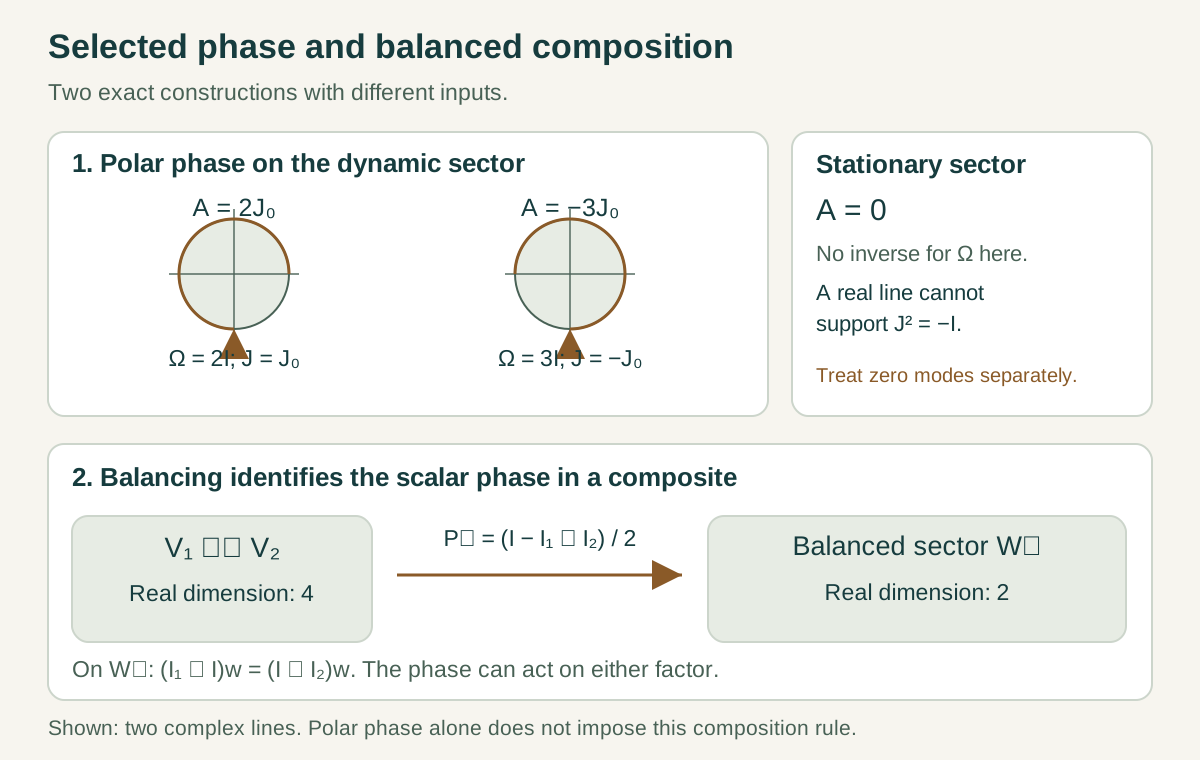
Polar decomposition selects a unique quarter-turn on the dynamic sector. Positive Schrödinger evolution uses i=−J; shared phase in a composite is then enforced by a distinct balancing construction.
Find this figure in the galleryStop 5 of 5
Make completion an operation with outcomes
A quantum instrument specifies all outcomes and their probabilities. Follow both branches before selecting one as a successful completion. In the illustrated projective example, selecting an outcome retains its success probability; a complete account also explains failed attempts and the memory that keeps an accepted result readable.
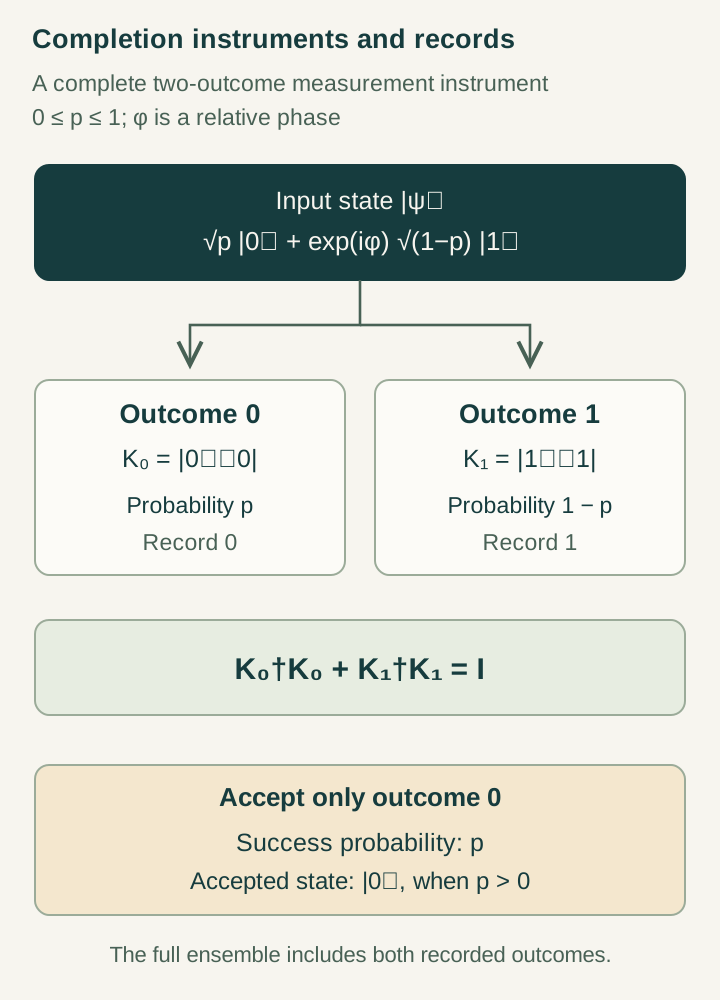
A normalized two-outcome projective instrument gives probabilities p and 1−p, with Kraus effects summing to identity. Selecting one outcome as completion preserves its success probability as part of the operational description.
Find this figure in the gallery